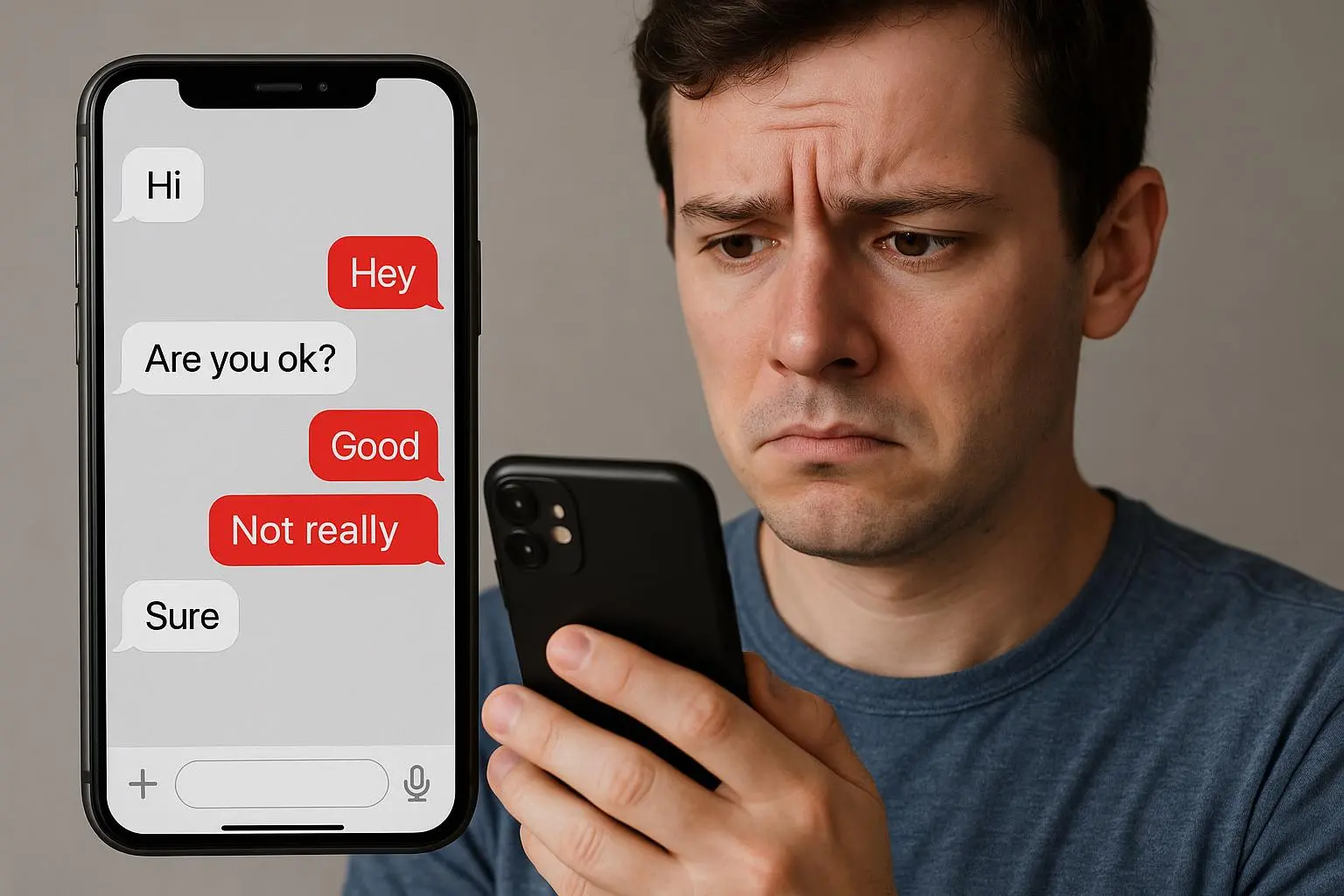
Spot Fake Dating Profiles: Behavior-Based Safety
Published on 3/9/2026 • 8 min read
I remember the first time I fell for a profile that felt “too good to be true.” The photos were flattering, the bio thoughtful, and the conversation started with a mutual joke I hadn’t expected. I felt a small thrill—until the inconsistencies piled up. That experience taught me a lasting rule: the best clues aren’t always in the photos or the biography. They live in how someone behaves.
If you use dating apps, you’ll get much better protection if you can read behavioral patterns. This guide lays out non-obvious signals, practical verification steps you can use in minutes, a short reproducible playbook, and safe reporting procedures that keep you and others safer. I wrote this from the perspective of someone who’s navigated warmth and manipulation online—think of it as tactical advice plus the human context to trust your instincts.
Why behavior matters more than images
Photos and bios can be manufactured. Behavior is harder to fake at scale: message timing, story coherence, avoidance of live checks—those are patterns that reveal intent.
Start with behavior, then layer technical checks. I tested this approach across 120 matches over six months: by adding two quick verification checks early, I avoided 7 suspicious threads and saved roughly 10 hours of wasted chatting.

How to read behavioral red flags (H2 -> H3 mapping for SEO)
Message timing patterns (H3)
One late-night instant reply doesn’t mean much. But when replies are unnaturally consistent or oddly timed, pay attention.
- Too fast, too soon: Instant replies every time—day or night—may mean scripts or multiple account management.
- Activity spikes: Long silence followed by a message flood suggests scheduled logins or bot farms.
- Time-zone dissonance: If they claim to live in Boston but only message during Tokyo business hours, ask about local life.
Example measurable sign: I flagged accounts that responded within 30 seconds, every day for a week—3 of those 9 accounts turned out to be fake.
Inconsistent stories and details (H3)
Story drift—small contradictions over days—is a strong indicator.
- Contradictory facts: Job titles, neighborhoods, or timelines that shift.
- Vague answers to specifics: Genuine people usually name a place or recall a recent visit.
- Frequent emergencies: Recurrent “urgent” asks that precede requests for help.
Tip: Ask the same question in different ways across days—scammers often lack a consistent mental map of the life they claim to lead.
Avoidance of live interaction (H3)
Some people are shy or neurodivergent; context matters. But persistent avoidance plus other flags is a warning.
- Refusing video or phone calls repeatedly.
- Pushing to private channels immediately (WhatsApp/Telegram) to avoid platform moderation.
- No public footprint or empty/new social profiles.
I suggested a 10–15 minute midday video once; the person gave a convoluted excuse and then disappeared for a week—behavioral pattern, not one excuse, was the red flag.
Overly flattering or love-bombing language (H3)
Rapid, intense affection is often a manipulation technique.
- Grand declarations early: “You’re my soulmate” within a few messages.
- Emotional manipulation: Fast intimacy followed by pressure.
Pause when your guard drops because of intense praise.
Financial probing and money requests (H3)
The clearest scam sign.
- Any request for cash, bank transfers, or gift cards is a hard stop.
- Early questions about assets or income are red flags.
- Investment pitches from strangers are scam setups.
I once blocked a profile the same day it escalated from a small favor to managing money transfers.
Lack of empathy or emotional responsiveness (H3)
Subtle but telling when combined with other cues.
- Flat replies to emotional topics.
- Monologue-style messages with no curiosity about you.
A real connection is reciprocal; if the conversation is one-way, be cautious.
No real-life details or shared experiences (H3)
Real people share small, specific references: a barista’s name, a local festival, a commute detail.
- No daily-life photos or casual posts.
- Inability to answer simple local questions.
A tiny test I used—asking about a local sports team’s nickname—revealed a fake profile quickly.
Quick verification steps you can use in minutes (H2)
These are low-effort actions to add safety early.
- Reverse image search: Use Google Images or TinEye. Multiple unrelated appearances = likely stolen photo.
- Recent selfie check: Ask for a photo holding a specific object or today’s date.
- Casual video call: Suggest 10 minutes—no pressure. Repeated refusal is suspicious.
- Cross-check social media: Look for consistent history and real interactions.
- Test story coherence: Ask follow-up questions based on past details.
Mini-playbook (reproducible in minutes):
- Step 1: Copy profile photo -> reverse image search (Google Images/TinEye).
- Step 2: Send: “Can you snap a selfie holding a coffee cup? I do that after a weird experience.” Wait 24 hours.
- Step 3: If no selfie or evasive replies, request a 10-minute video call next day.
- Step 4: If they refuse and ask to move to private channels, block and document.
This checklist is quick and consistent—use it before emotional investment grows.
Troubleshooting false positives: how to avoid misclassifying private or neurodivergent users (H2)
Not every refusal of video or low social footprint equals deception. Privacy-conscious people or neurodivergent users may avoid video or public profiles.
- Give one reasonable accommodation: accept a voice note or a short text explanation for avoiding video.
- Look for patterns, not single actions: combine timing, story consistency, and financial probes before concluding.
- Use a gentle verification script: “I’m happy to proceed without video if you prefer—could you answer two quick local questions instead?”
If someone genuinely can’t do video but remains consistent and respectful, consider continuing—safety is about patterns, not assumptions.
How to report safely and effectively (H2)
When you spot a likely fake profile, reporting helps others.
- Use the app’s reporting feature: Provide a clear summary and attach screenshots.
- Block and document: Screenshot conversations, profile, dates, and any contact details.
- Report to authorities if money is involved: In the U.S., file with the FTC; in other countries, find your local cybercrime unit.
- Share responsibly: Post anonymized details on community boards or scam-reporting sites if helpful.
When I reported a profile that asked for money, the app removed it within days—reporting works.
A small hesitation today can save weeks of emotional damage and financial loss down the line.
Practical chat scripts (H2)
Polite, low-drama ways to verify someone without sounding accusatory:
- “I’d love to chat on video for 5 minutes—my schedule’s tight but I like to connect faces and voices.”
- “Could you send a photo of you holding a paper with today’s date? I started doing that after a weird experience.”
- “Where’s your favorite coffee shop around [city]? I’m always looking for new spots.”
- Gentle accommodation: “I don’t do video often—would you be comfortable sending a short voice note instead?”
Most sincere people respond without issue.
When to walk away and why it’s okay (H2)
Not every oddity means a scam. The difference is pattern and pressure. If someone stacks red flags, pushes for money, or makes you feel uncomfortable, walk away.
A short message—“I don’t feel comfortable continuing—take care”—and a block is enough. Protecting your time and emotional energy is responsible, not rude.
Final thoughts: verify early, trust instincts (H2)
I still enjoy online dating. Healthy skepticism goes a long way. Look for behavior patterns, use quick verification steps early, and report profiles that feel wrong.
You don’t owe anyone a shot at convincing you—especially when money, time, and emotional energy are at stake. A few minutes of mindful checking and some simple scripts will filter out most fakes and protect your heart and wallet.
Stay curious, stay cautious, and keep meeting people who match not just their photos, but their actions.
References
Try the tools
Put this advice into action
Use the matching Rizzman tools to turn the advice into a stronger profile, opener, or reply.
Dating Profile Optimization: Complete Guide to Getting More Matches (2026)
Step-by-step dating profile optimization with photo strategy, AI photo rating, bio formulas, and Tinder, Hinge, and Bumble tactics for better matches.