Quality Over Quantity: A Practical Matching System
Published on 1/18/2026 • 10 min read
I used to treat matching like a numbers game: more swipes, more messages, more chances. For a while it felt productive — even exciting — like casting a wide net would inevitably pull something great. What I learned (painfully, then gratefully) was that quantity doesn’t equal value. The real work was defining what “quality” meant for me and building simple, trackable systems that let me prioritize people who aligned with that definition.
Below is a practical framework I refined over 18 months across dating and professional outreach: how to translate priorities into measurable signals, how to score and filter matches using a reproducible template, and how to balance exploration with precision so you don’t miss surprises while staying focused on what’s likely to work.
Why it’s worth it: in my first three months using this system I filtered ~220 leads down to 34 watches and 8 hot prospects, which produced 6 meaningful conversations and 3 real-life meetups. I cut time spent on low-signal threads by roughly 40% and doubled my conversion-to-meetup rate.
Quality is a lens, not a quota. Once you know what to look for, you see better and waste less time chasing noise.
1 — Define your personal quality criteria
Your criteria should be honest, prioritized, and flexible. I organize mine into three buckets: core values & goals, practical alignment, and interaction signals.
Core values and long-term goals
- What truly matters long-term? For me: similar relationship timeline, shared curiosity, and mutual respect for downtime. I wrote a short list and narrowed it to three dealmakers and three dealbreakers. That kept the filter sharp without being rigid.
- Examples: wants children (yes/no), commitment timeline, ethics/faith, intellectual curiosity.
Practical alignment (location, timing, availability)
- Proximity matters. Long-distance can work — but only if both agree and have bandwidth.
- My checklist: commutable distance or willingness to relocate, similar timelines for commitment, compatible financial/scheduling realities.
Interaction signals (communication, curiosity, follow-through)
- How someone interacts often reveals compatibility faster than any profile line.
- I look for: curiosity (asks follow-ups), clarity (shares intentions), responsiveness that matches my pace.

2 — Turn criteria into measurable metrics
Words are slippery; numbers aren’t. Translate each prioritized criterion into a 0–5 score and track them in a spreadsheet or lightweight CRM. Consistency prevents gut-driven swings.
Scoring template (my default weights)
- Core values alignment: 0–5 (weight 30%)
- Practical alignment: 0–5 (weight 25%)
- Communication quality: 0–5 (weight 30%)
- Initial chemistry/interest: 0–5 (weight 15%)
Weighted score = Core0.3 + Practical0.25 + Communication0.3 + Chemistry0.15
I flag anyone above 3.5 as worth investing more time in.
Pasteable CSV row example (one-line, ready to import):
Name,Platform,CoreValues,Practical,Communication,Chemistry,WeightedScore,Status
Alex,AppX,4,5,5,3,4.4,Hot
Small spreadsheet mock (columns): Name | Platform | CoreValues(0-5) | Practical(0-5) | Communication(0-5) | Chemistry(0-5) | WeightedScore | Status
Formula for WeightedScore (Google Sheets / Excel): =CoreValues0.3 + Practical0.25 + Communication0.3 + Chemistry0.15
Status rules (example):
- WeightedScore >= 3.5 AND Communication >= 3 => Hot
- WeightedScore >= 3 => Watch
- Else => Low
3 — Use filters to prioritize (the “Rizzman” filters)
Filters are your autopilot: they surface high-probability matches so you can focus energy where it matters. My Rizzman filters combine threshold scores with binary must-haves.
Basic Rizzman filter
- Absolute must-haves (fail fast): geographic radius, non-negotiable dealbreakers (e.g., kids if that’s a dealbreaker), basic logistics.
- Weighted threshold: weighted score >= 3.5
- Communication gate: at least one message showing curiosity or follow-up within the first three exchanges.
If a lead passes all three, they go into “Hot.” If they pass the score but fail communication, they go into “Watch.”
Automating filters
- Tools I used: Google Sheets (desktop, current as of 2025), Airtable (basic plan), and a lightweight CRM (HubSpot free tier) for contact notes.
- Conditional formatting rules (Google Sheets):
- Green fill if WeightedScore >= 3.5 and Communication >= 3
- Yellow fill if WeightedScore >= 3 and WeightedScore < 3.5
- Red fill otherwise
- Use formulas to compute scores and a script or Zapier to tag contacts in your CRM when status changes.
4 — Balancing exploration with precision (a tested rhythm)
I used to swing between casting a wide net and hyper-targeting. The sustainable approach is rhythm: schedule both exploration and precision and track returns.
My weekly routine (example I followed for 6 months)
- Precision days: 2 of 5 workdays — focus on filtered, high-score matches; deeper messages; schedule meetups.
- Exploration day: 1 of 5 — reach out beyond filters (different age ranges, neighborhoods, or interests).
- Maintenance: 2 of 5 — respond, update scores, follow up.
Results I tracked over 6 months (Jan–Jun 2024):
- Leads processed: 720
- Hot prospects: 26
- Meetups scheduled: 18
- Ongoing meaningful connections: 7
Precision produced a 3x higher meetup conversion than exploration in my dataset; exploration uncovered 2 surprising long-term matches that wouldn’t have passed my initial filter.
5 — Improve profile targeting and messaging
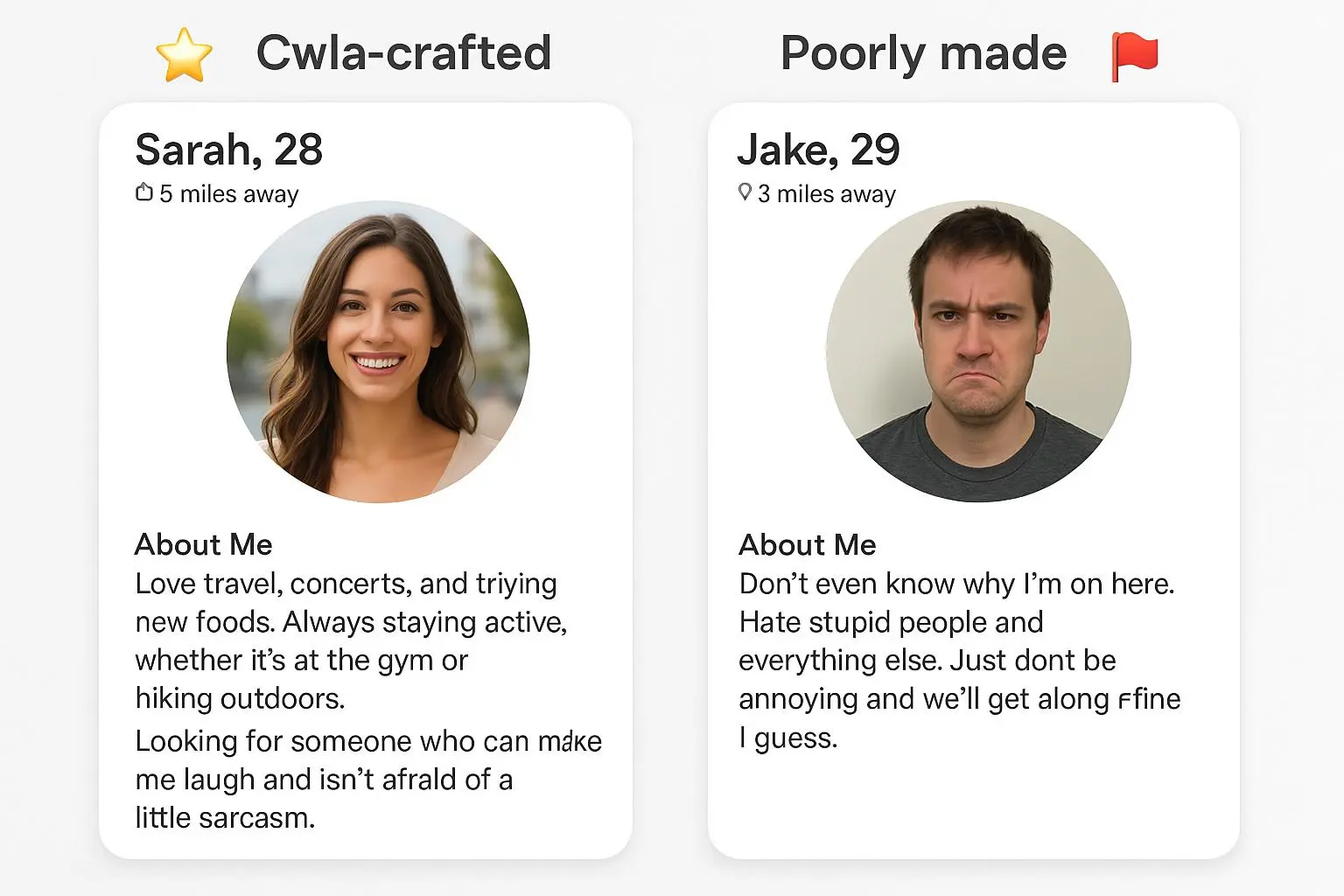
Small profile changes attract different people. Specificity acts as its own filter.
Profile adjustments that worked for me
- Swap vague lines for specifics: “Weekends hiking local trails, two long international trips a year.”
- State intent gently: “Interested in a meaningful relationship” (clear without aggressive tone).
- Update quarterly based on conversation patterns.
Messaging that signals quality
- Open with reference, not trivia: “I see you brew coffee — what’s the last coffee discovery that surprised you?”
- Suggest a low-friction meetup or call when momentum builds.
6 — Common pitfalls and how to avoid them
Overweighting initial chemistry
- Early chemistry can mask misalignment. If someone scores high on vibe but low on values or logistics, slow down and use the checklist.
Perfectionism in criteria
- Too rigid rules out options. Keep one experiment slot per month for someone who breaks a non-essential rule but intrigues you.
Ignoring follow-through signals
- People say a lot; they do less. Consistency — showing up for plans — often trumps clever messages.
7 — How I tested this (tools, versions, and rules)
Tools I used and how I set them up (replicable):
- Google Sheets (2024–2025): scoring columns, WeightedScore formula, conditional formatting (Green/Yellow/Red).
- Airtable (free tier): optional if you prefer a visual base and views for Hot/Watch/Low.
- HubSpot CRM (free): store conversations, link to Sheet rows, add tags via Zapier.
- Zapier (free/basic): automate row-to-contact updates (optional).
Example conditional formatting rule (Google Sheets):
- Range: WeightedScore column
- Custom formula for green: =AND($G2>=3.5,$D2>=3) (adjust columns as needed)
- Formatting: green fill, bold text
I ran the system live for 18 months (Aug 2023–Feb 2025), iterating weights quarterly. My monthly review tracked conversion rates from message → meaningful conversation → meetup.
8 — Templates and a tiny case study
Scoring row template (copy-paste ready):
Name,Platform,CoreValues(0-5),Practical(0-5),Communication(0-5),Chemistry(0-5),WeightedScore,Status
Taylor,AppY,5,4,4,3,4.1,Hot
Case study: The slow burner (March–May 2024)
- Matched March 3, 2024. Initial chemistry 3/5, values 5/5, communication 4/5. Weighted score 3.9 => Hot.
- Invested time with weekly thoughtful exchanges and one short in-person coffee 6 weeks later. By late April the chemistry increased and we had a multi-hour hike conversation that led to a committed check-in in May.
- Lesson: systems let you see steady signals and reward patience.
9 — Communication upgrades that pay off
High-impact habits I adopted:
- Ask two follow-ups per opening message—reveals curiosity.
- Mirror one-line messaging briefly; if they stay terse, downgrade communication score.
- Use calendar invites for confirmed dates—reduces flakiness.
10 — Practical next steps (doable in 30–90 minutes)
- Write your three core values, three dealbreakers, and one practical requirement (distance/timeline).
- Create a one-row scoring template in a spreadsheet and paste five recent matches.
- Set conditional formatting rules and flag Hot/Watch/Low.
- Schedule your weekly rhythm: two precision sessions, one exploration, and time for maintenance.
This system won’t eliminate surprises — and you shouldn’t want it to. What it does is give you a trustworthy map so you spend time on people who matter, not on noise. I still love a serendipitous message that breaks my mold. Now, when that message appears, I recognize it for the signal it is — and I have the space to respond intentionally.
Micro-moment: I once shifted my focus after a three-message thread—what began as small curiosity turned into a coffee two weeks later. The difference was that I noticed follow-up signals I previously ignored.
Personal anecdote (100–200 words) I remember a stretch when I believed responsiveness was the only metric that mattered. I was juggling dozens of conversations and rewarding the quickest replies with deeper attention. After a few disappointing meetups it hit me: fast replies had been masking real misalignment. I built the scoring template out of frustration and a stubborn desire to stop repeating the same mistakes. Over the next eighteen months I kept the template modest — four scores, a weighted formula, and clear status rules. The payoff wasn’t instant fame or perfect matches; it was clarity. I started saying no more often, and when I did say yes, the conversations were already better. The system didn’t make choices for me, but it made my reasons for choosing visible and repeatable.
References
Try the tools
Put this advice into action
Use the matching Rizzman tools to turn the advice into a stronger profile, opener, or reply.
Dating Profile Optimization: Complete Guide to Getting More Matches (2026)
Step-by-step dating profile optimization with photo strategy, AI photo rating, bio formulas, and Tinder, Hinge, and Bumble tactics for better matches.