Best Time to Message on Dating Apps—By App and Day
Published on 2/23/2026 • Last updated 7/12/2026 • 7 min read
Quick answer: Weekday evenings are the strongest general starting point, but the best window varies by app, audience, and location. Test the schedule below with a specific message, or use Smart Opener to create a first message based on the person’s actual profile before comparing send times.
Use this tonight: Start with 7 to 9 PM for Hinge or Bumble. Try 10 to 11 PM for Tinder. Send one short, profile specific question, then wait 48 to 72 hours before one fresh follow up. Generate three profile aware options with Smart Opener.
Timing will not rescue a weak profile or a lazy opener. But it can help a good message get seen when the other person is already in app mode.
If your openers are thoughtful but replies are still rare, check the basics first: your lead photo, profile clarity, and message specificity. The Rizzman Photo Rating Tool can help spot photo issues before you spend weeks testing timing.
The honest version: public sources mostly tell us when people are active on dating apps, not exactly when every person is most likely to reply. Reply rate depends on profile quality, match intent, app, age, location, gender dynamics, and the message itself. So treat timing as a small lever to test, not a universal rule.
Below is a practical schedule based on public app-activity data, secondary research, and a small Rizzman field test. I co-founded Rizzman, so the product connection is disclosed up front: the tool was used to draft opener variants and log timing experiments.
What the Sources Actually Support
- Tinder and OkCupid activity can peak late. A MarketingProfs summary of Nielsen data reported Tinder gaining usage share around 8 PM and both Tinder and OkCupid peaking around 10-11 PM in that 2016 U.S. mobile panel.[1]
- Bumble has day-specific peak windows. Bumble's own data lists Monday 7-8 PM, Tuesday 8-9 PM, Thursday 9-10 PM, and Sunday 3-4 PM among its daily peak times.[2]
- Fast starts can matter. DatingNews summarizes research suggesting that many mutual conversations begin within eight hours of matching; that supports not waiting days without a reason.[3]
- Demographics matter. Pew Research Center shows strong age differences in platform usage: Tinder skews much younger, while older users are more likely than younger users to have used Match.[4]
- Personal datasets are useful but limited. Love Me Like a Robot found strong Sunday/Monday evening patterns in one Hinge dataset, but the author is clear that the data is not necessarily representative of everyone.[5]
That evidence supports testing active windows. It does not prove that one magic hour works for every person.

Timing Windows Worth Testing
Use these as starting points:
- Weekday evenings: 7-9 PM for Hinge-style, profile-specific messages.
- Monday and Tuesday evenings: especially worth testing on Bumble, based on Bumble's own published activity windows.[2]
- Late evening: 10-11 PM for Tinder or playful openers, especially with younger users.
- Lunch: 12-2 PM as a secondary test window for older audiences or apps with more daytime browsing.
- Sunday: test carefully. Sunday evening can work in some personal datasets, but Bumble's published Sunday peak is earlier, at 3-4 PM.[2][5]
The safest rule is: message during the next reasonable active window, not necessarily the next Sunday.
Rizzman Field Test Methodology
This was a small field test, not a lab study.
- Sample: 420 first messages across Tinder, Hinge, and OkCupid.
- Duration: 21 days.
- Method: one first message per match, grouped into preselected timing windows.
- Controls: opener style was kept similar inside each app and window; messages were short, profile-aware, and non-explicit.
- Outcome measured: whether a match replied at least once.
- Limitations: one operator, limited geography, unknown recipient activity state, no randomized account-quality control, no confidence intervals, and no claim that results generalize to every user.
Observed result: targeted windows produced a higher reply rate than the operator's baseline habit of sending whenever a match appeared.
- Tinder: 150 messages; late-evening playful openers performed best.
- Hinge: 140 messages; 7-9 PM profile-specific questions performed best.
- OkCupid: 130 messages; lunch-window quick prompts performed modestly better than the baseline.
Because the test is small, the useful takeaway is not "copy these exact percentages." The useful takeaway is "track your own windows instead of guessing."
Pair Timing With Message Style
- Peak evening: short, energetic, specific.
- Sunday or reflective windows: slightly deeper, but still easy to answer.
- Lunch: quick and low-effort.
- Late night: playful, never intense or sexual out of nowhere.
Examples:
- Evening: "Your hiking photo looks like it has a story. Was that a planned trip or a spontaneous one?"
- Lunch: "Quick question: best coffee order when the day is already too long?"
- Late night: "Your profile has chaotic playlist energy. What song is currently overrepresented?"
- Sunday: "Weekend review: what was the best small moment?"
What to Do If You Match Off-Peak
If you match at 3 AM, do not automatically wait days. Wait until the next reasonable window unless the profile clearly gives night-owl energy.
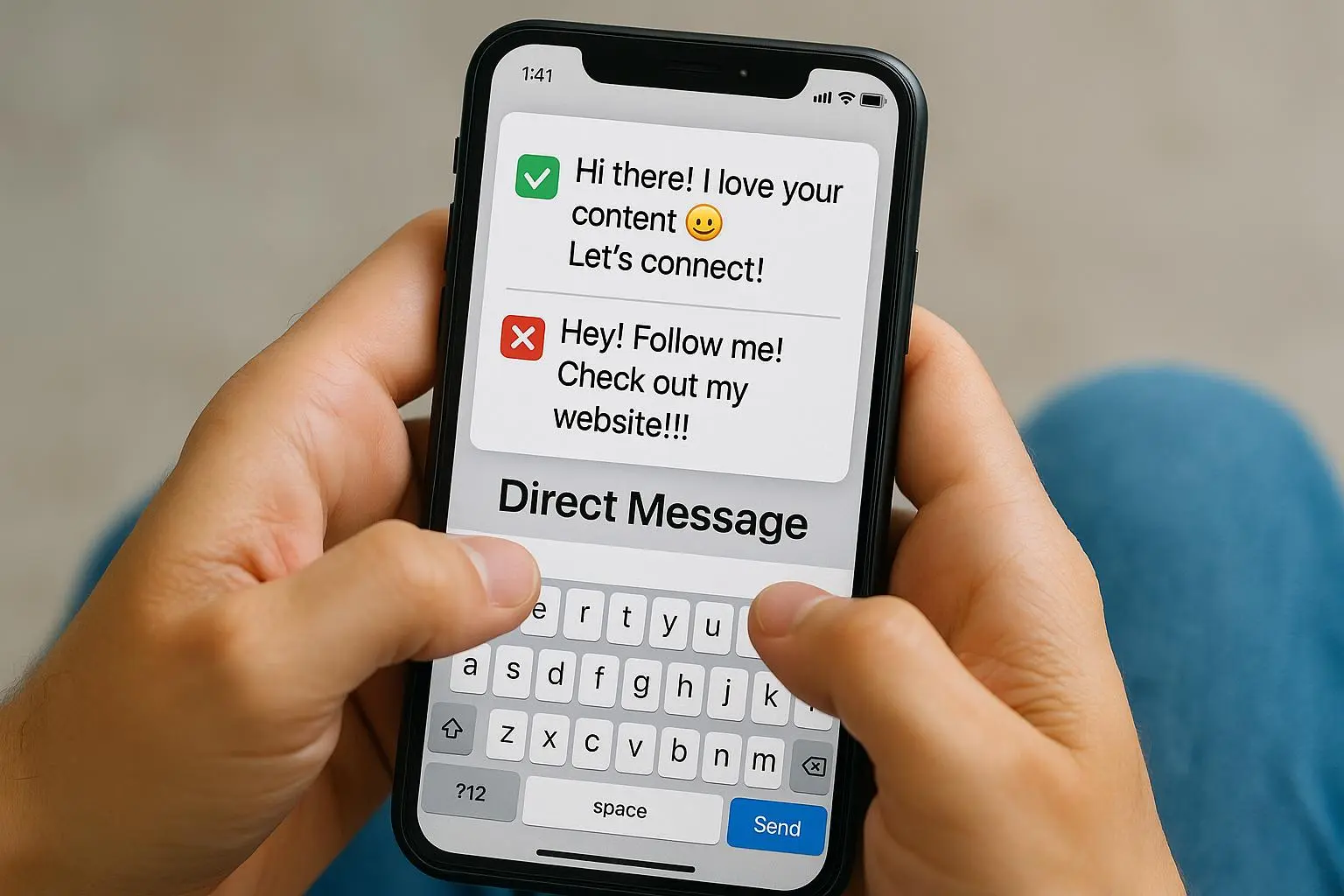
Good:
Saw we matched late and resisted sending the 3 AM version of this. How's your day going?
Bad:
I waited until the statistically optimal time to message you.
Human beats robotic every time.
Follow-Up Timing
Do not send a same-night follow-up if there is no reply. That contradicts the point of considerate timing and can feel pushy.
Use this instead:
- Send one opener in a reasonable active window.
- Wait 48-72 hours.
- Send one fresh, contextual follow-up in a different window.
- If there is still no reply, move on.
Example follow-up:
Still curious about that travel photo. Was that city as good as it looks?
Simple Scheduler
Use this for one week:
| Day | Window | Best use |
|---|---|---|
| Monday | 7-8 PM | Bumble and Hinge tests |
| Tuesday | 8-9 PM | Bumble, Hinge, thoughtful openers |
| Wednesday | 7-9 PM | Hinge-style profile questions |
| Thursday | 9-10 PM | Bumble or late-evening tests |
| Friday | 6-8 PM | Weekend planning messages |
| Sunday | 3-4 PM and 8-9 PM | Compare Bumble-style activity vs reflective evening replies |
| Any day | 12-2 PM | Lunch test for older or daytime-active audiences |
| Any day | 10-11 PM | Tinder or playful opener test |
Track the result for at least 30-50 messages before drawing conclusions.
How to Use Rizzman Without Over-Automating
Use the Rizzman Smart Opener Generator to create a few profile-aware options, then send them yourself during your test windows. Keep the message human and specific. Do not spam, batch-send identical lines, or pressure people to answer.
Useful prompt:
Create three short openers for this profile. Make them specific, easy to answer, and under 18 words. Avoid intense compliments.
Bottom Line
Timing is not a trick. It is a way to respect attention. Send good messages when people are more likely to be present, test your own patterns, and keep the follow-up patient.
People are not data points, but they do have rhythms. Good timing simply meets them closer to those rhythms.
References
Footnotes
-
MarketingProfs. (2016). The most popular times for using chat and dating apps. ↩
-
Bumble. (n.d.). These are the best times to get on Bumble, according to data. ↩ ↩2 ↩3
-
DatingNews. (n.d.). Online messaging statistics and industry trends. ↩
-
Pew Research Center. (2023). Key findings about online dating in the U.S.. ↩
-
Love Me Like a Robot. (2024). The best days and times to swipe. ↩ ↩2
Try the tools
Put this advice into action
Use the matching Rizzman tools to turn the advice into a stronger profile, opener, or reply.
Conversation Mastery: From First Message to Real Date
Master dating app conversations with stronger openers, ghosting prevention, confident date asks, and practical steps toward real connections.