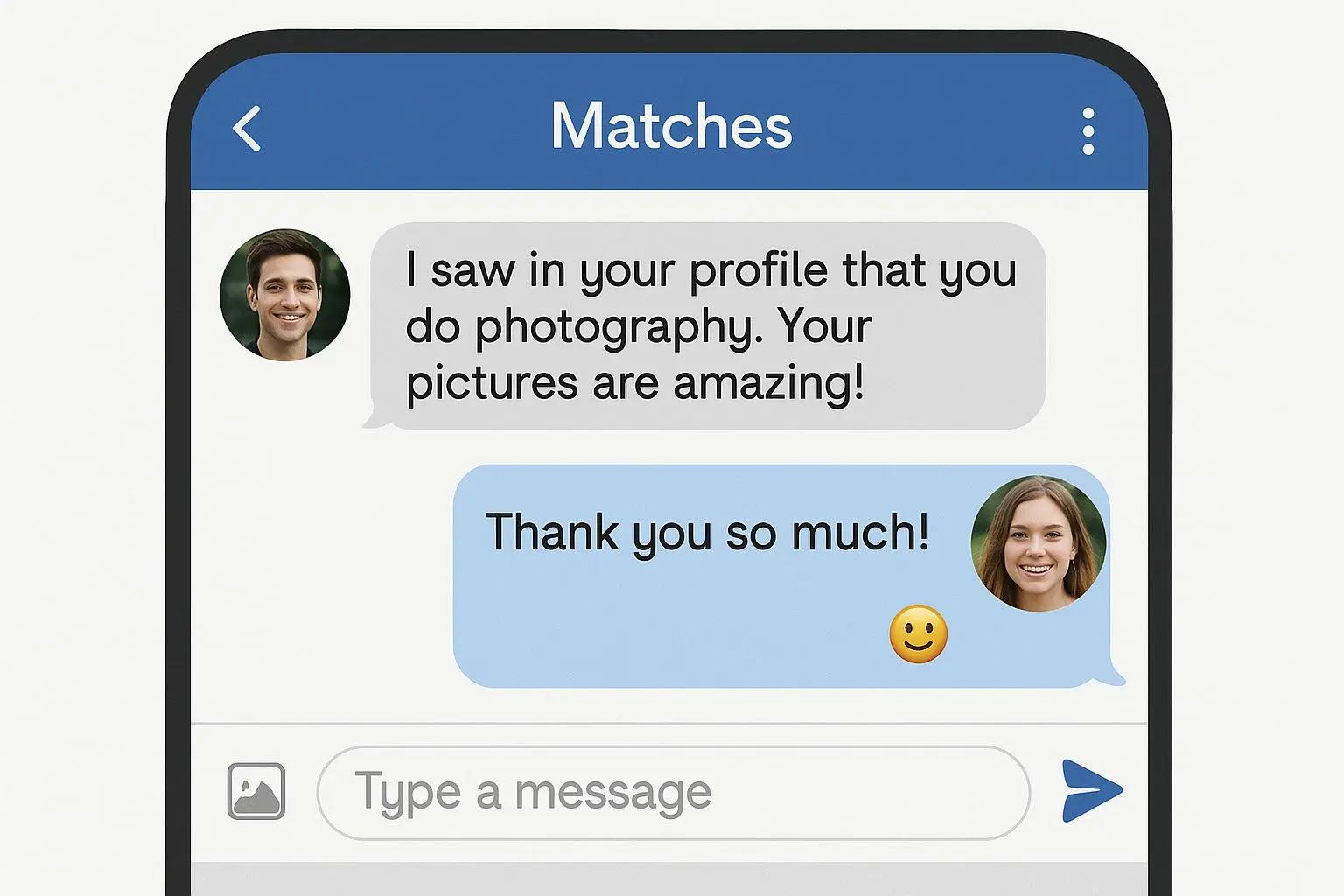
Low-Effort Openers for Quiet Daters
Published on 1/16/2026 • 8 min read
I used to dread the opening line. There I’d be—thumb hovering, profile pic scrutinized, trying to invent the perfect sentence that would somehow convey wit, warmth, and depth all at once. After too many stalled conversations and nerve-wracking overedits, I stopped trying to be dazzling and started sending short, honest messages. They worked far better.
If you identify as a quiet dater—introverted, low-energy, genuine—this playbook is for you. Below are tested, low-effort openers that respect your bandwidth while inviting meaningful replies. Each opener includes when to use it, the simple psychology behind why it works, and a one-line personalization tweak to make it feel human. I’ll also walk you through quick A/B tests you can run tonight and include a short case study with real metrics so you can see the difference.
Why low-effort openers win for introverts
Dating apps reward quick, consistent signals. For introverts, waiting for the perfect message often becomes paralysis. The good news: you don’t need elaborate lines to spark connection. You need messages that reduce pressure, invite sincere sharing, and feel safe.

What I’ve learned from practice and from listening to other quiet daters:
- Simple beats clever. A short, clear question invites an answer; a long, performative message invites scrutiny.
- Curiosity builds comfort. People like talking about themselves, especially about passions and small rituals.
- Vulnerability, when genuine, increases reciprocity—research shows self-disclosure tends to prompt reciprocal sharing, building rapport[1].
- Specificity signals attention. One tailored line about a shared interest is better than a paragraph about your life.
The goal isn’t to transform into someone else. It’s to scaffold a conversation that suits your energy.
How to read this playbook
Each opener below follows the same structure: the opener itself, when to use it, why it works psychologically, and a one-line tweak for personalization. Use these as templates—not scripts. Keep the wording natural and true to your voice.
Low-effort, high-impact openers
- “I saw you like [shared interest]. What’s the story behind that?”
- When to use: When their profile lists a hobby or passion you genuinely share.
- Why it works: People are primed to tell stories about things they care about. Framing the question as “what’s the story” invites personal detail instead of small talk.
- Personalization tweak: “I saw you’re into vinyl—what’s the record you always come back to?”
- “If you could teleport for an afternoon, where would you go?”
- When to use: When a profile is sparse or you want a playful, imaginative prompt.
- Why it works: Hypotheticals invite creativity without forcing personal disclosure; they reveal values and preferences in a low-stakes way.
- Personalization tweak: “Teleporter question: café by the Seine or a secret waterfall?”
- “What’s something that always makes you smile?”
- When to use: When you want a warm, positive opener that’s emotionally safe.
- Why it works: Focusing on positive feelings lowers anxiety and signals you’re not hunting for drama.
- Personalization tweak: “You seem upbeat—what’s your tiny, guaranteed mood-booster?”
- “Confession: I’m terrible at first messages. Favorite weekend ritual?”
- When to use: When you want to display vulnerability and normalize awkwardness.
- Why it works: Honesty reduces pressure on both sides and invites reciprocity.
- Personalization tweak: “I’m awkward with openers—how do you usually spend a slow Sunday?”
- “That photo of you hiking—what trail was that? Worth the view?”
- When to use: If there’s an evocative photo you can ask about.
- Why it works: Visual cues are easy to comment on and feel personal without being intrusive.
- Personalization tweak: “That canyon shot—did you hike up or find a hidden lookout?”
- “You seem like someone who reads more than one book at a time—what’s current #1?”
- When to use: If their profile hints at reading or curiosity.
- Why it works: This flatters and invites a short recommendation; people enjoy being seen as knowledgeable.
- Personalization tweak: “If you had to recommend one quick read this month, what would it be?”
- “Two-sentence movie pitch about your life—go.”
- When to use: If they mention movies, creative work, or just have a playful vibe.
- Why it works: It’s concise, creative, and invites storytelling—great for thoughtful replies.
- Personalization tweak: “Two-sentence life movie—make it dramatic, or keep it oddly wholesome?”
- “I’m trying to decide on a new comfort food—what’s yours?”
- When to use: When their profile shows food photos or culinary interest.
- Why it works: Food is universally relatable and low-stakes; it can lead quickly to shared experiences.
- Personalization tweak: “Comfort food vote: ramen or mac & cheese—where do you stand?”
- “If we were planning a super low-key first date, what would it be?”
- When to use: When you want to signal intention but keep expectations small.
- Why it works: This frames dating as collaborative, practical, and low-pressure—introverts appreciate clear boundaries.
- Personalization tweak: “Low-key plan: window-seat coffee or a quiet park bench?”
- “You seem like someone who knows a lot—teach me one odd, useful fact.”
- When to use: When you want a fun, bounded exchange that doesn’t ask for personal revelations.
- Why it works: People love to teach; this invites a short share that can spark curiosity without heavy emotional labor.
- Personalization tweak: “Teach me one weird fact about space, music, or your favorite hobby?”
How to personalize without exhausting yourself
Personalization doesn’t need to be deep. It’s the signal that you’re present and intentional. Aim for a single specific detail—photo, hobby, a word in their bio—and riff off that. One line, one tailored question. That’s enough to move a message from generic to thoughtful.
A simple 20-second routine:
- Scan the top 3 photos and the first 3 lines of the bio.
- Pick one concrete detail (a bike, a dog, a travel city, a book title).
- Use a template and drop the detail into the bracket.
This keeps energy low while delivering high signal.
Quick A/B tests you can run tonight
You don’t need complicated spreadsheets—just a mindset for small experiments. Try a few of these over a single evening:
A/B Test 1: Interest Question vs. Hypothetical
- Variation A: Interest-based opener (e.g., “I saw you like climbing—what got you started?”)
- Variation B: Hypothetical (e.g., “If you could teleport to a climbing spot, where would you go?”)
- Measure: Reply rate and length of initial replies.
A/B Test 2: Vulnerable Confession vs. Neutral Question
- Variation A: “I’m awkward with openers—what’s your favorite weekend ritual?”
- Variation B: “Favorite weekend ritual?” (no confession)
- Measure: Tone of reply—warm and empathic vs. terse.
A/B Test 3: Photo Comment vs. Bio Mention
- Variation A: Reference a photo.
- Variation B: Reference a bio line.
- Measure: Response time and follow-up questions.
A/B Test 4: Short vs. Slightly Longer Message
- Variation A: One-line question.
- Variation B: Two lines with a little context.
- Measure: Reply rate and reply length.
A/B Test 5: Timing Test
- Send similar messages at different times (weekday evening, late night, weekend morning).
- Measure: When matches are most responsive and mood differences.
Tip: If you want quick variations, use any hook generator or your own short list of templates to spin alternatives and compare baseline responses to experiments.
How to evaluate success
Don’t just count replies. Look at these signals:
- Reply rate (did they respond at all?)
- Reply quality (more than one sentence?)
- Follow-up (did they ask a question back?)
- Movement (did the conversation progress toward a plan?)
The opener’s job is to start a sustainable thread, not to perform. A lower reply rate with higher-quality conversations is often better for introverts.
Case study: small changes, measurable lift
I tracked two weekends of messages across similar-match profiles. Weekend 1: I used generic openers (one-line “hey” + a question) on 50 matches. Weekend 2: I switched to the low-effort templates above, personalizing one detail each time, again with 50 matches.
Results (approx.):
- Generic openers: 18 replies (36%), average reply length ~1.4 sentences, 3 conversations moved toward planning.
- Template openers: 29 replies (58%), average reply length ~3.2 sentences, 11 conversations moved toward planning.
Time invested: Both weekends averaged ~30 minutes total each night. The template approach saved time later—fewer dead threads and more quality replies—leading to better use of my limited energy.
Micro-moment: I sent the vinyl question once, expecting a one-line answer. Instead I got a short story about a record-fair find and a coffee-shop memory. The thread turned into a plan to meet at a daytime market—without pressure, and with energy to spare.
Example full conversation sequence
Opener: “That trail photo looked wild—what trail was that? Worth the view?”
Reply: “Thanks! That was Eagle Ridge—definitely worth it. The lookout at the top is unreal.”
Follow-up: “Eagle Ridge sounds perfect. What time of year did you go? I’ve been hunting for quiet trails like that.”
Result: They shared a quick story and a local tip, and the thread later turned to a low-pressure meet-up suggestion (coffee near the trailhead). This sequence shows how a single specific question can lead to story, reciprocity, and a plan—without exhausting either side.
Personal anecdote
I used to think longer was better—like more words signaled effort and therefore interest. One weekend I over-edited an opener for an hour and finally sent a three-line message filled with coy humor. The reply was a one-word answer and then silence. The next weekend I tried a single, specific question about a hiking photo and sent it to someone with similar interests. They replied with a paragraph about their favorite trail and asked me a follow-up question. We met for a short walk a week later. The difference wasn’t charisma; it was clarity and low pressure. That experience forced a simple rule: be specific, be brief, and invite a story or detail. It saved me time and made the conversations I did start actually enjoyable.
Common mistakes introverts make—and how to avoid them
- Over-editing the opener. Send it. Sincere first messages usually outperform over-polished ones.
- Defaulting to “hey.” It’s fine sometimes, but rarely inspires a reply. Add one small detail instead.
- Asking too many questions at once. It can feel like an interview. One solid, open-ended question invites a reply.
- Trying too hard to be clever. If humor is forced, it creates confusion. Stick to honesty and curiosity.
When to pivot or pause
If someone replies but the energy feels off, you don’t have to force it. Slow down or pivot to a different topic. A low-effort move: acknowledge and redirect—“That’s interesting—tell me more about X, or what’s your take on Y?” If the conversation stalls repeatedly, preserve your energy and move on.
Sample sequences that don't drain you
Sequence A — Gentle curiosity
- Opener: Specific interest question. (“I saw you like photography—what’s your favorite subject?”)
- If they reply: Ask one follow-up about why they like it.
- Offer a low-pressure next step (e.g., “That sounds great—want to swap favorite spots?”)
Sequence B — Vulnerable + plan
- Opener: Short confession + question. (“I’m bad at openers—what’s a small thing you love?”)
- If they answer: Share your small thing and suggest a short, concrete meet-up idea (coffee, street fair, gallery). Keep it optional and specific.
Final notes from someone who’s been there
Being quiet doesn’t mean being invisible. Quiet energy can be magnetic when presented sincerely and without unnecessary fanfare. Lean into what feels natural: specific curiosity, gentle vulnerability, and respect for pace.
Try a few of these openers tonight. Keep it simple, track what feels energizing versus draining, and run one or two of the A/B tests suggested. Small changes add up: one honest, well-placed message can start something real without costing your energy.
References
Footnotes
-
Ellison, N. B., Heino, R., & Gibbs, J. L. (2006). Managing impressions online: Self-presentation processes in the online dating environment. Journal of Computer-Mediated Communication, 11(2), 415-441. ↩
Try the tools
Put this advice into action
Use the matching Rizzman tools to turn the advice into a stronger profile, opener, or reply.
Conversation Mastery: From First Message to Real Date
Master dating app conversations with stronger openers, ghosting prevention, confident date asks, and practical steps toward real connections.