Dry Texting Meaning: Examples and What to Reply
Published on 3/21/2025 • Last updated 8/15/2026 • 6 min read
Quick answer:
- Definition: Dry texting is a repeated pattern of short, low-effort replies such as “k,” “lol,” “nice,” or a lone emoji. The reply gives the other person little to continue with.
- Likely meaning: One short message may simply mean they are busy or brief by nature. Repeated replies with no detail, questions, or initiative can signal low interest or a mismatch in communication style.
- Next message: Send one specific, easy-to-answer line, such as “What was the best part of your day?” Then notice whether they meet you halfway.
Need help wording that reply? Use Chat Assist to compare a few natural drafts, then send only the one that still sounds like you.
Free reply helper
Turn the dry text into a reply you would actually send
Paste the recent messages or add a screenshot. You will get several low pressure options, including when the better move is to stop chasing.
No account required. Adults only.
What does dry texting mean?
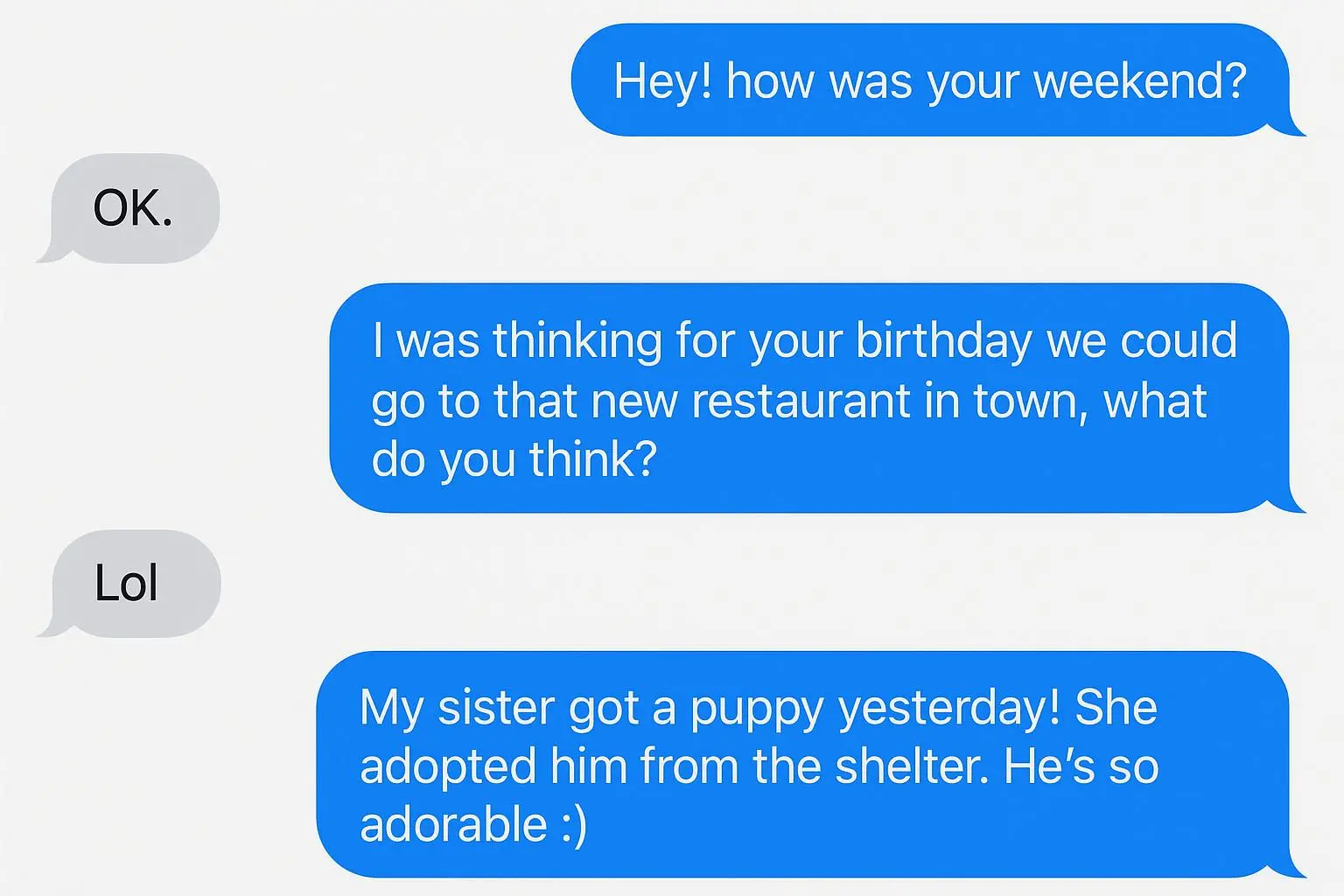
A dry texter is someone whose replies are consistently short, flat, or lacking in conversational energy. The important word is consistently. A brief reply after a long day is normal. A conversation becomes dry when one person repeatedly answers without adding detail, asking anything back, or creating a natural next step.
This isn’t about one-off terse replies. Everybody is busy or distracted sometimes. Dry texting becomes a pattern: you ask, they answer in a way that doesn’t invite follow-up, and you’re left doing all the lifting. It feels a bit like trying to hype a party where you’re the only one bringing balloons.
A dry reply isn’t always a verdict on you. It’s an ambiguous communication clue until you test it.
Common dry text examples include:
- “k” or “ok”
- “lol” with nothing else
- “nice” or “cool”
- “yup,” “nope,” or “idk”
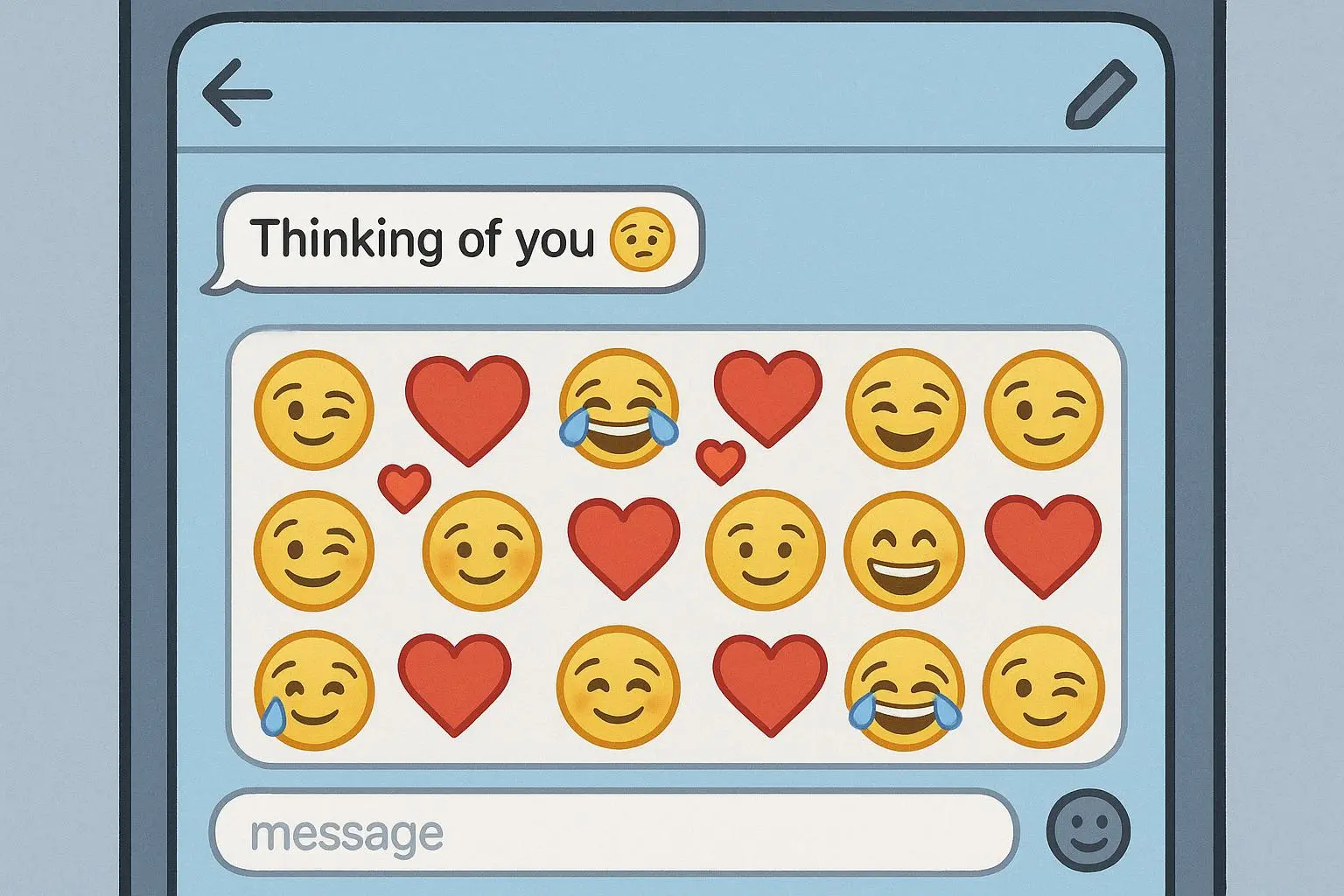
- A lone emoji or reaction
- An answer that ignores the question you asked
Short does not always mean dry. “Busy until six, can I call you after?” is brief but engaged because it gives context and proposes a next step.

Signs a conversation is actually dry
Look for the pattern rather than judging one message. A conversation is more likely to be dry when several of these are true:
- You initiate nearly every conversation.
- They answer questions but rarely ask one back.
- Their replies give you no new detail to respond to.
- They regularly ignore the main point of your message.
- The conversation improves only when you do all the work.
- They avoid calls or plans without suggesting another time.
This distinction matters because a single “lol” is weak evidence. Repeated one-sided effort is much more useful information.
Why are their texts so dry?
Dry texting can mean different things. Avoid treating a short reply as proof of one specific motive.
- They’re genuinely busy. Work, parenting, or life can mean short replies are simple acknowledgements, not dismissals.
- They’re not a “texter” by nature. Some people prefer in-person or phone interaction and use texting as a utility.
- They’re shy or unsure what to say. Introverts and overthinkers sometimes default to safe, short responses.
- It’s just their communication style. Some people value brevity and clarity, and long threads feel like noise to them.
- They are losing interest. Repeated low effort can be a passive way of letting a conversation fade.
Context matters. A chronically dry response across topics and times points to low investment. A single ‘k’ after a long message? Not a crisis.
What to reply to a dry text
Your next message should be specific, low pressure, and easy to answer. Use the reply that fits the situation.
| Their text | A better reply | Why it helps |
|---|---|---|
| “lol” | “Be honest, which part got you?” | Asks for a specific reaction. |
| “nice” | “What was the best part of your day?” | Moves from a dead end to a concrete topic. |
| “idk” | “No pressure. Want option A or option B?” | Makes the answer easier. |
| “yeah” | “You sound busy. Want to pick this up later?” | Checks context without accusing them. |
| A lone emoji | “I’m reading that as approval. What would you do?” | Keeps the tone playful and asks a real question. |
Want help choosing the tone? Use Chat Assist to compare a few natural replies, then edit the one that sounds most like you.
If the conversation has been dry for several messages, try direct clarity instead of another clever opener: “I can’t tell if you’re busy or not feeling this conversation. Which is it?”
How to restart a dry conversation
Ask open-ended, curiosity-driven questions
If you only ask yes or no questions, short answers are predictable. Be specific. Instead of “Did you have a good day?” try “What was the weirdest part of your day?” or “What made you laugh today?” Open questions give the other person something useful to respond to.
Match energy, then nudge it up
If they reply briefly, do not immediately send a long paragraph. Match their pace, then gently raise the energy with a playful question, short voice note, or relevant meme.
Use voice notes and visuals
A short voice note conveys tone that plain text can lose. A relevant photo, GIF, or meme can also give both people a fresh subject.
Change the medium
Some people are flat over text but engaged in person. Suggest a call or a simple plan: “This is easier to talk about than type. Coffee this week?”
Talk about their interests
People open up about what they care about. Ask about a hobby, a show they love, or a detail they once mentioned. Passion beats small talk.
Be playful and remove pressure
Low-stakes prompts reduce pressure. Try “Choose our next topic: travel disaster or unpopular opinion?” Giving two options is easier than asking someone to invent a subject.
Set limits and protect your time
If you are doing all the work, step back. You do not need to announce a test or play a waiting game. Simply stop carrying the exchange and see whether they choose to reconnect.
Is dry texting a red flag?
Dry texting is not automatically a red flag. It becomes more concerning when it sits beside disrespect, manipulation, repeated cancellation, or a refusal to communicate directly. It can also reveal a basic compatibility issue: one person wants regular conversation while the other treats texting as logistics only.
Ask yourself two questions:
- Do they show interest in other ways, such as making plans, calling, or being attentive in person?
- After you explain what you need, does the communication become more balanced?
If the answer to both is no, the label “dry texter” matters less than the one-sided pattern.
When to use an AI reply tool
Rizzman publishes this article, and Chat Assist is one of our tools. Open Chat Assist when you know what you want to communicate but need help making the message clearer, warmer, or less confrontational. Treat every suggestion as a draft to adapt to your voice. It cannot know the other person’s motive and does not replace direct communication.
When to stop replying
Sometimes a conversation stays dry despite one or two clear attempts. That is useful information, not a challenge you have to win.
Stop when you have made one or two clear attempts and the pattern has not changed. Do not keep generating new openers after sustained silence or an explicit boundary. If they return later with context and reciprocal effort, you can reassess then.
Quick messages you can copy
Adapt these to the relationship and your normal tone:
- “Quick question: what made you smile today?”
- “This topic needs an expert. What’s your take?”
- “Too long for text. Can we voice-note this?”
- “Rate my weirdest habit 1 to 10. Go!”
How to ask about dry texting directly
If you want clarity without drama, keep it short and honest:
- “I feel like I do most of the texting. Are you enjoying our chats?”
- “I get busy too, but I’d prefer if we were both into this. Want to talk on the phone sometime?”
- “If texting isn’t your thing, that’s fine. Just say so and I won’t take it personally.”
Directness avoids guessing and gives the other person a chance to explain or show up differently.
The bottom line
Dry texting is a pattern, not a diagnosis. Check the context, send one message that is specific and easy to answer, and notice whether the other person contributes. If their effort stays low, protect your time instead of searching endlessly for the perfect reply.
Try the tools
Put this advice into action
Use the matching Rizzman tools to turn the advice into a stronger profile, opener, or reply.
Conversation Mastery: From First Message to Real Date
Master dating app conversations with stronger openers, ghosting prevention, confident date asks, and practical steps toward real connections.