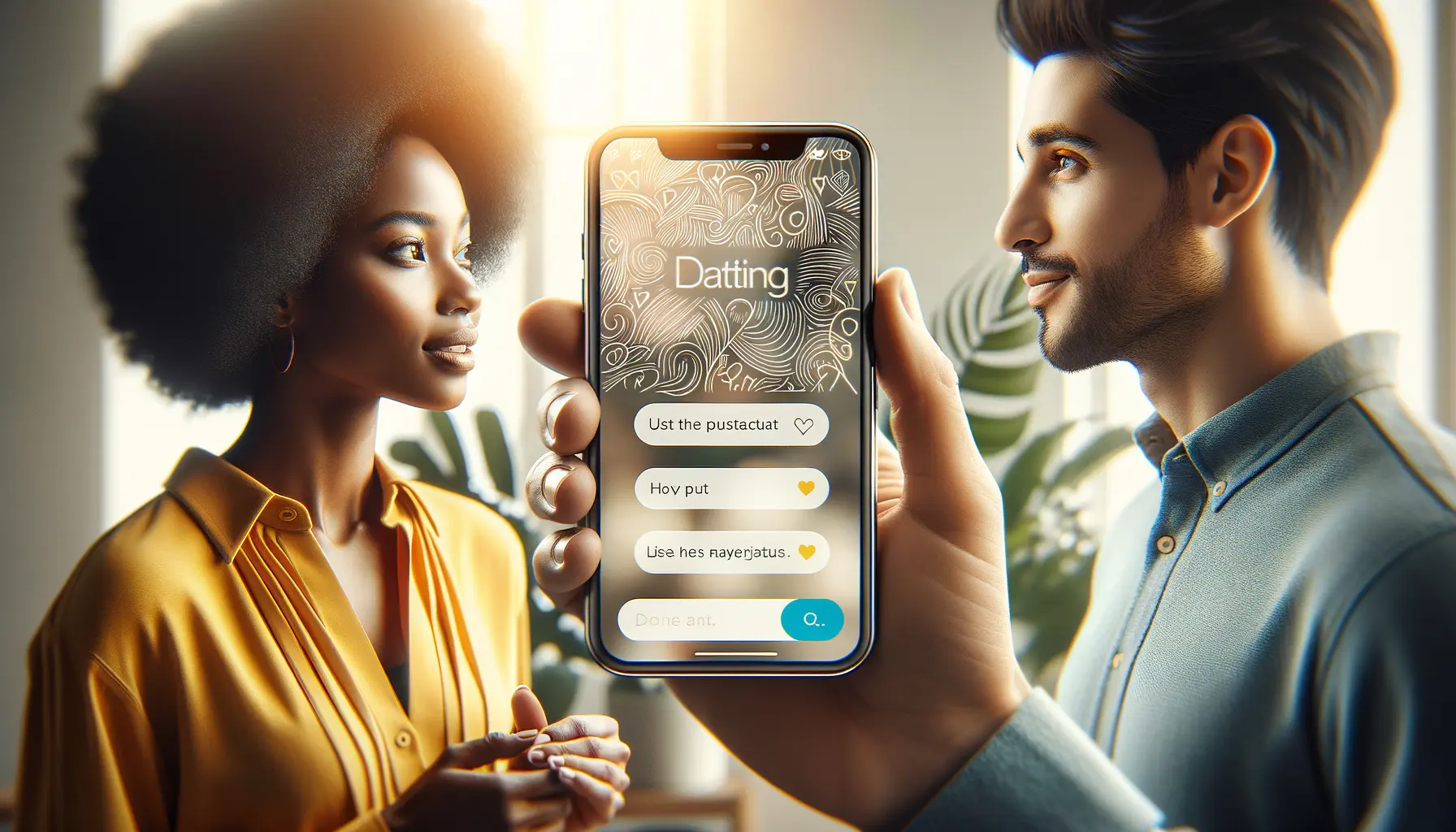
AI Dating Assistants: Your Digital Wingman or Catfish Creator?
Published on 11/24/2025 • 9 min read
Twenty-five percent of people are using chatbots to flirt with you right now. Half of Gen Z has a robot wingman in their pocket.[1]
But here's the truth nobody's saying: the more people automate their game, the easier it becomes to stand out by just being real. While everyone's copying AI pick-up lines, you can win by being the only authentic person in someone's DMs. The bar has never been lower. The question is whether you'll use it.
The Rise of the Digital Wingman
A Reuters report from October 2025 documented something fascinating: AI is becoming everyone's digital wingman, but "perfection without connection" is the new problem. People using AI to write dating messages risk sounding too polished, which actually creates distrust rather than attraction.
Around six million people now use AI-generated content in their dating app profiles and conversations. That's not a small niche—that's a fundamental shift in how modern dating works. Apps like Rizz have 15 million users. This isn't coming; it's already here.
The dating app landscape has pivoted hard. Where traditional apps focused on matching algorithms, the new frontier is conversation assistance. Major platforms are integrating AI-powered tools and icebreaker prompts specifically to reduce the anxiety of that first message.
The paradox: AI can help you express yourself more clearly, but it can also make you sound like everyone else. The key is knowing the difference between enhancement and replacement.
Why People Are Turning to AI for Dating Help
Let's be honest about why AI dating assistance is exploding: dating apps created a communication problem they couldn't solve. They gave you access to hundreds of potential matches but no help actually talking to them. For people with conversation anxiety, every blank message box becomes a paralysis trap.
Research shows that roughly one-fifth of Americans associate their mobile devices with stress, and texting anxiety has become one of the most common struggles in modern dating. When you send a text to someone you're interested in, your brain enters what researchers call a "heightened state of agitation." You've put yourself out there with no immediate feedback, no body language to read, no way to gauge how it landed.
AI assistants promise to solve this by handling the part people struggle with most: knowing what to say. They analyze profiles, suggest conversation starters, and offer real-time coaching when chats stall. For anxious daters, this feels like a lifeline.
But relationship expert Dr. Pepper Schwartz offers a crucial distinction: "AI is a powerful tool, and I think if you use it as an editor or architect of how to say what you want to say, it's fine in dating." The key phrase? "What you want to say." AI should help you express your genuine thoughts more effectively, not manufacture a personality you don't have.
The Authenticity Problem
Here's where things get complicated. The number one dating trend right now is authenticity and vulnerability. Seventy-five percent of singles believe you should be able to discuss traditionally taboo topics like politics and money earlier in the dating process. People are craving real, honest communication more than ever.
But how do you be authentic when you're using AI to write your messages?
The answer depends entirely on how you're using it. There's a massive difference between:
Using AI as a confidence coach: "I want to compliment their sense of style without sounding weird. What are some ways to phrase this?" Then taking the suggested direction and writing it in your own words.
Using AI as a ghostwriter: Copy-pasting generated messages and pretending they came from you naturally.
The first enhances your communication. The second replaces it. One helps you become better at expressing yourself. The other prevents you from developing that skill at all.
The "Too Perfect" Problem
Recipients can often sense when something feels off or overly polished. That's the Reuters finding that should scare every AI dating assistant company: perfection without connection creates distrust.
Think about how this plays out in practice. Someone uses AI to craft the perfect opener—witty, personalized, engaging. It gets a response. They use AI again for the second message. And the third. And the fourth. They're getting responses, so it's working, right?
Then they meet in person, and suddenly they can't maintain that level of wit, that perfect word choice, that flawless conversation flow. The person across from them is wondering where the charming texter went. The AI user is wondering why real-life conversation feels so hard compared to the app.
This is the catfish problem updated for the AI age. You're not lying about what you look like; you're lying about how you communicate. And sooner or later, that gap between digital you and real you becomes impossible to hide.
When AI Help Actually Helps
Despite these concerns, AI dating assistance isn't inherently problematic. It's a tool, and like any tool, its value depends on how you use it.
AI assistance works when it helps you:
Overcome initial paralysis. You know you want to comment on their music taste, but you're stuck on phrasing. AI suggests three different angles. You pick the one that resonates and write it your way.
Identify patterns you can't see. Maybe you ask too many questions without sharing about yourself. Maybe your messages accidentally sound more formal than you intend. AI can flag these patterns and help you adjust.
Learn conversation dynamics. By seeing how AI suggests transitioning topics or deepening discussions, you internalize strategies you can use independently later.
Build confidence. Having a backup option reduces the high-stakes feeling of every message. This can paradoxically help you relax and be more authentic because you're less anxious.
AI assistance fails when it:
Replaces your voice entirely. If your matches are falling for AI's personality rather than yours, you're building a relationship on false premises.
Prevents skill development. If you never practice writing your own messages, you'll never get better at it. AI becomes a crutch instead of training wheels.
Creates unrealistic expectations. If your texting persona is dramatically more charming than your in-person self, the first date will disappoint.
The Training Wheels Approach
Think about learning to ride a bike. Training wheels don't ride the bike for you—they support you while you build confidence and muscle memory. Eventually, you don't need them anymore because you've developed the skill yourself.
That's how AI conversation assistance should work. You use it heavily at first, when anxiety is high and skills are low. As you build confidence and internalize patterns, you rely on it less. Eventually, you might check in occasionally for a fresh perspective, but you're fundamentally capable of managing conversations yourself.
Many people find that after using conversation coaching tools for a few weeks, they've internalized strategies that help them start and maintain chats more easily. The AI didn't replace their communication skills—it helped them develop those skills faster than they would have through trial and error alone.
The Ethics of AI-Assisted Flirting
Should you tell matches you're using AI assistance? It's a genuinely complex question with no clear answer.
On one hand, using any tool to improve your dating outcomes is normal. Nobody discloses that they got help picking their profile photos from friends or that they rehearsed their first date conversation topics. Why should AI be different?
On the other hand, there's something qualitatively different about AI writing your actual messages versus AI helping you choose which photos to use. The messages ARE the early relationship. They're how the other person is getting to know you. If AI is doing that heavy lifting, they're not really getting to know you at all.
A reasonable middle ground: use AI to overcome anxiety and learn strategies, but always put things in your own words. If you can't explain to someone how you came up with a message without saying "AI wrote it," you're probably relying too heavily on the tool.
How to Use AI Without Losing Yourself
If you're going to use AI dating assistance (and honestly, everyone has access now, so why wouldn't you?), here are guidelines that keep you authentic:
Use AI for direction, not dictation. Ask for conversation topic suggestions, not fully written messages. "What are three ways I could respond to this?" beats "Write me a witty response."
Always translate to your voice. Even if AI suggests something good, rephrase it in how you'd naturally say it. Your casual phrasing might be less polished, but it's genuinely you.
Focus on strategy over content. "How do I transition from small talk to deeper conversation?" is a better use than "Write me a message about her travel photos."
Set boundaries for yourself. Maybe you use AI for openers only, or only when you're genuinely stuck. Having rules prevents overdependence.
Practice without AI regularly. Like taking the training wheels off periodically to see how you're progressing. Force yourself to handle some conversations entirely on your own.
The Competitive Advantage of Authenticity
Here's the wild part: as more people use AI, authentic communication becomes a differentiator rather than a baseline. When everyone's messages sound polished and perfectly crafted, the slightly awkward but genuinely personal message stands out.
Imagine receiving these two openers:
"I noticed you're into indie music! I'm always looking for new recommendations—what's been on your playlist lately?"
"Okay so I saw you listen to the same obscure band my roommate's been blasting for three weeks and honestly I need to know: are they actually good or am I just getting Stockholm syndrome from overexposure?"
The first is fine. Polished. Could've come from anyone (or from AI). The second is messy, specific, and clearly written by an actual human with actual experiences. Which one would you rather respond to?
As AI assistance becomes ubiquitous, the human tells become valuable. The slight awkwardness that shows you're not perfectly polished. The specific reference that couldn't have come from a generic prompt. The phrasing quirk that marks this as genuinely you.
What This Means for Your Dating Strategy
If you're using apps in late 2025, you're competing in an environment where AI assistance is normal. That means two things:
Don't handicap yourself unnecessarily. If tools exist that can help you communicate more effectively, using them isn't cheating—it's smart. Just use them strategically, not as a crutch.
Lean into what makes you human. Your quirks, your awkwardness, your specific way of seeing the world. AI can help you express these things more clearly, but it can't manufacture them. That's your competitive advantage.
The people who win in this environment aren't the ones with the fanciest AI tools or the most perfectly crafted messages. They're the ones who figure out how to use technology to enhance their authenticity rather than replace it.
Tools Like Rizzman: Where They Fit
Full disclosure: yes, Rizzman is an AI dating assistant. But the philosophy matters. Good AI assistance treats you as a human developing skills, not a puppet that needs scripting.
Rizzman's approach focuses on:
- Giving you options and letting you choose what resonates
- Teaching you strategies you can internalize over time
- Analyzing what's working and what isn't in your communication
- Reducing anxiety so you can show up as your actual self
The goal isn't to make you dependent on AI forever. It's to bridge the gap between where your communication skills are now and where they need to be for successful dating. Think of it as a coach who gives you training exercises, not a teammate who plays the game for you.
The Bottom Line on AI Dating Assistants
AI dating assistants are tools, not solutions. They can help you overcome anxiety, learn strategies, and communicate more effectively. They can't manufacture genuine connection, and they shouldn't replace the development of real communication skills.
Use them like training wheels: support when you need it, gradually reducing reliance as you build confidence. Never let them become a crutch that prevents you from developing authentic voice and genuine presence.
And remember: in a world where everyone's using AI to sound perfect, your authentic awkwardness might just be your secret weapon.
FAQ: AI Dating Assistants
Is it cheating to use AI to write dating messages?
It depends on how you're using it. Getting help overcoming anxiety and learning strategies? That's smart. Having AI write all your messages and never developing your own voice? That's building a relationship on false premises. The key is using AI to enhance your communication, not replace it.
Will people be able to tell I'm using AI?
If you copy-paste without personalizing? Probably. AI-generated text often sounds too polished or generic. If you use AI for direction but write in your own voice? They'll just think you're good at texting. The goal is using AI to express yourself better, not to be someone else.
How do I avoid becoming dependent on AI assistance?
Set rules for yourself: maybe only use it for openers, or only when genuinely stuck. Regularly practice conversations without AI help. Focus on learning strategies you can internalize rather than just getting quick fixes. Think training wheels, not wheelchair.
Should I tell matches I use AI help?
There's no consensus answer. Most people don't disclose every tool they use for dating (friend advice, photo help, etc.). The key question: are you being fundamentally honest about who you are? If AI is just helping you express your genuine thoughts more clearly, disclosure isn't necessary. If it's creating a persona you can't maintain in person, that's a problem.
Ready to Find Your Balance?
Try Rizzman as your dating confidence coach. Get conversation suggestions that help you express yourself without losing your authentic voice. Learn strategies, build confidence, and develop skills you'll use long after you've stopped relying on AI.
Because the best use of technology is helping you become more genuinely yourself—not less.
References
Footnotes
-
JPLoft Technologies. (2024). Dating App Statistics 2024: User Behavior and Engagement Insights. JPLoft Blog. ↩
Try the tools
Put this advice into action
Use the matching Rizzman tools to turn the advice into a stronger profile, opener, or reply.
Modern Dating App Survival: Your Complete Platform Guide
Master modern dating apps with expert strategies for video profiles, AI matchmaking, platform tactics, safety, and better etiquette.